Category: Junior Poetry Anthology

  • Sandpiper

    Sandpiper

    Introduction

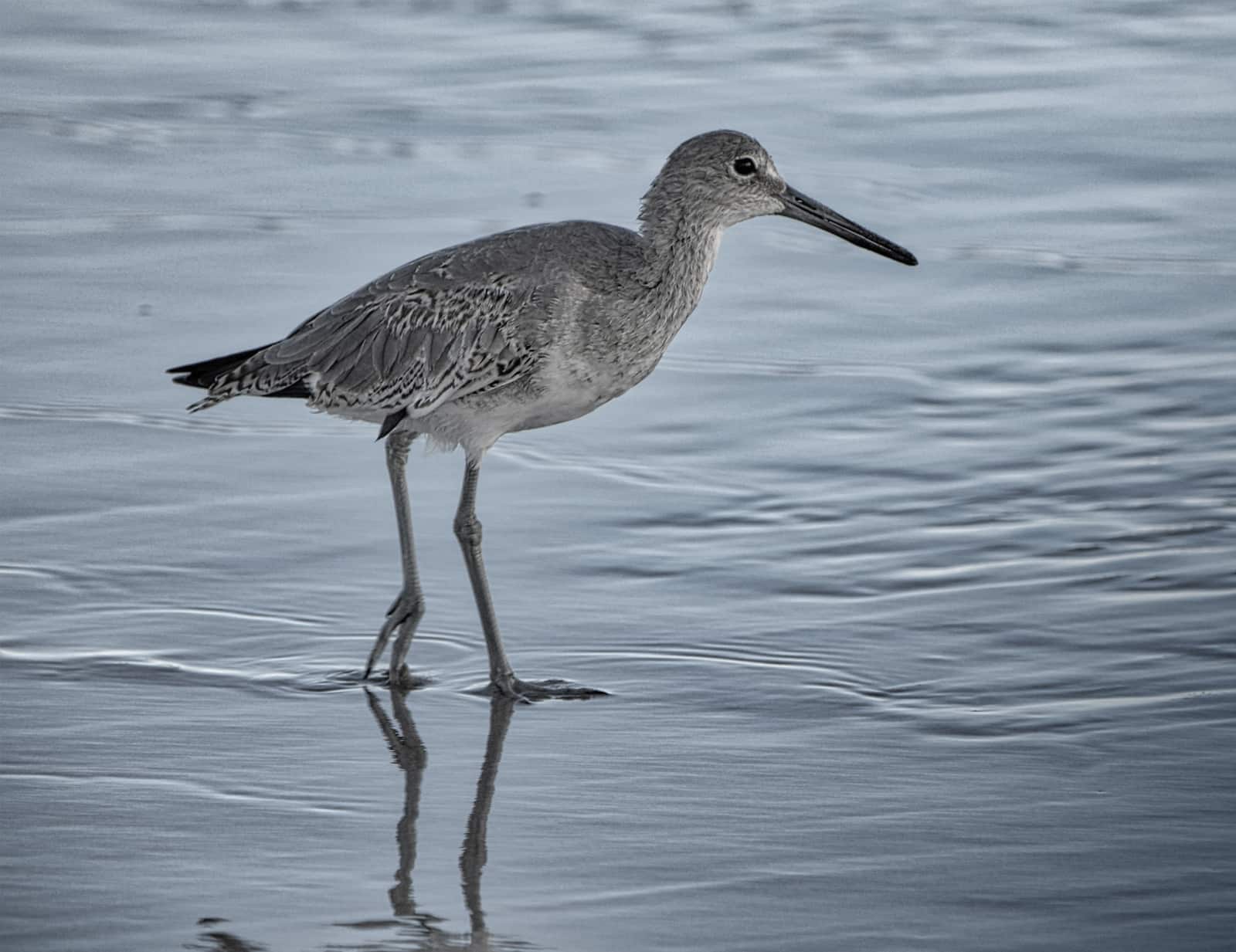
    Robert Frost’s “Sandpiper” praises the wonderful energy and ability of this “brittle” bird to “outshout” the Atlantic Ocean when it migrates across thousands of miles to another habitat. The message of this uplifting poem is straightforward: even the least significant of us can be tremendously powerful and we should not ignore our own strengths.

    Sandpiper

    At the edge of tide
    he stops to wonder,
    races through
    the lace of thunder.

    On toothpick legs
    swift and brittle,
    he runs and pipes
    and his voice is little.

    But small or not,
    he has a notion
    to outshout
    the Atlantic Ocean

    Comprehension Questions

    1. Where is the poem set? Use evidence from the text to support your answer.
    2. How do you think the small bird feels when it “stops to wonder” before trying to fly over the ocean?
    3. Suggest why the metaphor comparing the white waves to “lace” is appropriate.
    4. Is “thunder” frightening?
    5. Do you think the metaphor comparing the bird’s “legs” to a “toothpick” is effective?
    6. The word “notion” suggests the bird has a vague understanding of what it is about to do. Suggest why Robert Frost chose this word instead of an alternative, such as thought or idea. In your answer, try to consider our inability to control our future.
    7. Can a “small” bird “outshout” a massive ocean?

    Contrasts

    The drama of any story will centre around some sort of important conflict or opposition. In “Sandpiper”, the conflict is between the small bird and the huge ocean it has to travel so Robert Frost tries to emphasise the difference throughout the short poem.

    Task 1: Explore how the poet emphasises the massive danger posed by the water. You should consider the impact of the metaphor describing the waves as a “lace of thunder” and the reference to the Atlantic Ocean.

    Task 2: Copy out the following mind map which includes various descriptions of the bird:

    Sandpiper Imagery

    Task 3: By working through each quotation, defining and explaining the significance of the images, write a paragraph summarising how the poet reinforces the fragility of the sandpiper. Analyse one image at a time but make sure you refer to the techniques used by Frost.

    Task 4: To conclude the essay-style answers of tasks one and three, suggest why Robert Frost creates such a massive contrast between the small bird and the huge Atlantic Ocean. You should consider the poet’s reasons for writing the poem and what he has learned from observing the sandpiper.

    Learn More

    • Free At Last

      Free At Last

    • Cloths of Heaven

      Cloths of Heaven

    • Remember

      Remember

    • The Toys

      The Toys

  • Pied Beauty

    Pied Beauty

    Gerard Manley Hopkins’ Pied Beauty praises God for the wonderful variety of colour and shapes that can be found in nature. The speaker believes the world’s beauty is evidence of God’s tremendous power.

    This poem uses alliteration and antithesis very effectively so read through the poem and complete the exercises to develop your understanding of these poetic methods.

    Pied Beauty

    Glory be to God for dappled things –
    For skies of couple-colour as a brinded cow;
    For rose-moles all in stipple upon trout that swim;
    Fresh-firecoal chestnut-falls; finches’ wings;
    Landscape plotted and pieced – fold, fallow, and plough;
    And áll trádes, their gear and tackle and trim.

    All things counter, original, spare, strange;
    Whatever is fickle, freckled (who knows how?)
    With swift, slow; sweet, sour; adazzle, dim;
    He fathers-forth whose beauty is past change:
    Praise him.

    Researching Language

    Poets have to take a creative approach to the language they use in their texts. Unfortunately, readers are not always familiar with those words and this can be a difficult obstacle to overcome.

    For example, the word “pied” means to be bicoloured or streaked, but you can probably guess the meaning of “couple-colour”. There are several other words and phrases in the poem that express similar ideas. Search for the following words in the dictionary, such as the online resource dictionary.com, and write down their definitions:

    1. dappled
    2. brinded
    3. freckle
    4. stipple

    Various images of nature reinforce this idea of “pied beauty”, such as the reference to pink-spotted trout and finches, which often have bars with contrasting colours on their feathers. When you are studying literature, it is important that you look up definitions and descriptions, even if you think you already know what those words mean.

    Sometimes, it is easier to use an image search to help you understand the writer’s intention. For example, in the first verse, the poet refers to the “plotted and pieced” countryside. Use an image search for “fallow” and “plough” to discover the difference in colour between the two fields.

    Finally, read through the poem again and select five more words to research or define.

    Alliteration

    Alliteration is the repetition of sounds at the start of important words. In the first line of “Pied Beauty”, Hopkins uses alliteration to connect the words “glory” and “God”. In this example, the “g” creates the same sound.

    Read through the poem again and create a list of the poet’s use of alliteration.

    Suggest reasons why Hopkins is doubling up the sounds in this particular poem.

    Antithesis

    This device refers to the use of contrasts for dramatic effect. For example, in the second verse, Hopkins mentions the “swift” and “slow” aspects of God’s creation. Swift obviously refers to things that are capable of moving very quickly whereas slow describes things whose movement lacks speed.

    Read through the poem and list examples of the poet’s use of antithesis.

    Suggest why Hopkins uses this technique so often in “Pied Beauty”.

    Learn More

    • Pied Beauty

      Pied Beauty

    • Remember

      Remember

    • Stopping By Woods On A Snowy Evening

      Stopping By Woods On A Snowy Evening

    • Sonnet 43

      Sonnet 43

  • Remember

    Remember

    The speaker in Christina Rossetti’s “Remember” wants her lover to remember her fondly when she has “gone far away into the silent land” and not to feel any guilt when the memories begin to fade because she would rather be forgotten if it made them feel “sad”. In this way, the speaker is willing to sacrifice her physical desires for the happiness of her true love.

    Remember

    Remember me when I am gone away,
    Gone far away into the silent land;
    When you can no more hold me by the hand,
    Nor I half turn to go yet turning stay.
    Remember me when no more day by day
    You tell me of our future that you plann’d:
    Only remember me; you understand
    It will be late to counsel then or pray.
    Yet if you should forget me for a while
    And afterwards remember, do not grieve:
    For if the darkness and corruption leave
    A vestige of the thoughts that once I had,
    Better by far you should forget and smile
    Than that you should remember and be sad.

    Dictionary Work

    When you are studying any text, you should look up any unfamiliar words or phrases because it will help your understanding of the story. An online dictionary, such as dictionary.com, can help.

    Research the following words: counsel, grieve, corruption, and vestige. If there are any other words you are not sure about, always look up their definitions.

    Comprehension Questions

    1. In the first line, the speaker wants her beloved to “remember” her when she has “gone away”. Why does she repeat the idea of “going far away” in the second line? What does this repetition suggest about her feelings?
    2. What is the speaker actually referring to in the euphemism “silent land”?
    3. Explain in detail what the image of the two lovers holding hands suggests about their relationship?
    4. Look at the fourth line. In your own words, describe what is happening in this image.
    5. What do you think the young lovers had “plann’d” for their “future”?
    6. Why did the speaker remind her lover that he will no longer be able to “counsel” her”? What does it suggest about their relationship?
    7. Explain why the speaker does not want her lover to “grieve” if he begins to forget her.
    8. What is the “darkness and corruption”?
    9. In your own words, describe what is the meaning of the image “forget and smile”.

    Repetition

    When writers repeat a word or a phrase, they are using the rhetorical device known as repetition. Quite often, this technique emphasises an idea and conveys its importance to the audience. Clearly, the speaker in Rossetti’s “Remember” wants her lover to “remember” her when she has “gone away”. Including the title, the word “remember” is used six times.

    However, by the end of the poem, does the speaker actually want her lover to “remember” her?

    Euphemism

    Instead of referring to death directly, Rossetti uses the milder and subtler description of the “silent land”. This type of substitution is known as a euphemism.

    What other euphemisms are used in poem?

    Suggest why the speaker seems to be unable to use the harsh and blunt word “death”.

    Learn More

    • Pied Beauty

      Pied Beauty

    • The Toys

      The Toys

    • Aftermath

      Aftermath

    • Jerusalem

      Jerusalem

  • Free At Last

    Free At Last

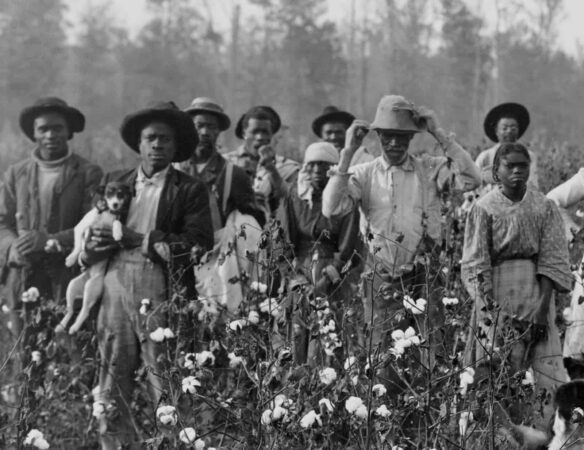
    Although the original composer behind “Free at Last” is unknown, the lyrics evoke a tremendous sense of hope despite the horrendous experiences of black slaves living in America. Published in John W. Work’s (1940) comprehensive collection of 250 spirituals, the hymn gained prominence when Martin Luther King referenced it in his famous “I have a dream” speech.

    Free At Last

    Way down yonder in the graveyard walk,
    I thank God I’m free at last,
    Me and my Jesus goin’ to meet and talk
    I thank God I’m free at last, O [Refrain]

    Ona my knees when the light passed by,
    I thank God I’m free at last.
    Thought my soul would rise and fly
    I thank God I’m free at last, O [Refrain]

    Some of these mornings, bright and fair,
    I thank God I’m free at last,
    Goin’ meet King Jesus in the air,
    I thank God I’m free at last, O [Refrain]

    Refrain:
    Free at last, free at last;
    I thank God I’m free at last;
    Free at last, Free at last,
    I thank God I’m free at last.

    Musicality

    Rhythm is one of the most important aspects of poetry that distinguishes it from other forms of writing, especially since a lot of poems are supposed to be sung and even accompanied by music.

    First, we are going to consider the rhyme scheme of “Free at Last”.

    When you are asked to identify the rhyme scheme of a poem, you should focus on the final sounds of each line. If you look at the first verse, “walk” and “talk” are obvious rhymes. The writer also repeats “last” in lines two and four. You should label the sounds in the following manner:

    Free at Last Rhyme Scheme

    In this example, the letter “a” represents the “alk” sound at the end of lines one and three. The letter “b” represents the “ast” sound on the other two lines. This gives the opening verse an abab rhyme scheme. This is known as alternate rhyme because every other line rhymes.

    However, suggest why the writer repeats the word “last” at the end of so many lines?

    What are the end-rhymes of the other two verses? If you have a printed copy of the poem, you should label the lines with the letters “a” and “b”.

    Call and Response

    The call-and-response technique is an important part of African-American music, especially in the gospel tradition. The pastor would “call” out a phrase and the congregation would offer their “response”. In this poem, the first and third lines serve as the “call”, which is then “answered” by the phrase “I thank God I’m free at last”.

    It is a terrific way to engage the audience and include them in the service. Since the lines are easy to remember, it also allows anyone who is unable to read or write to join the performance.

    Listen to the following version of “Free at Last” and you will appreciate the energy and power of this particular form of composition.

    Writing Task

    The writer also divides the poem into verses with four lines each. These are known as quatrains.

    Try writing a fourth quatrain for this poem. Make sure lines two and four continue with “I thank God I’m free at last”.

    Song Sheet

    Free At Last Hymn Sheet

    Learn More

    • The Toys

      The Toys

    • Aftermath

      Aftermath

    • Cloths of Heaven

      Cloths of Heaven

    • Free At Last

      Free At Last

  • We Wear The Mask

    We Wear The Mask

    In We Wear the Mask, which was published in 1896, Paul Laurence Dunbar describes having to wear a false mask of “grins and lies” in an oppressive and prejudiced society so he could disguise the awful “tears and sighs” he felt inside.

    Although it is not mentioned explicitly in the poem, it is quite clear that the speaker could be referring to the terrible racism in America. For example, Dunbar’s parents were emancipated from slavery less than ten years before he was born in 1872. He was the only African-American student in his high school so he fully understood the impact of having to hide his true feelings from his friends in order to survive in a world that was unable to sympathise with his situation.

    We Wear The Mask

    We wear the mask that grins and lies,
    It hides our cheeks and shades our eyes,—
    This debt we pay to human guile;
    With torn and bleeding hearts we smile,
    And mouth with myriad subtleties.

    Why should the world be over-wise,
    In counting all our tears and sighs?
    Nay, let them only see us, while
    We wear the mask.

    We smile, but, O great Christ, our cries
    To thee from tortured souls arise.
    We sing, but oh the clay is vile
    Beneath our feet, and long the mile;
    But let the world dream otherwise,
    We wear the mask!

    Dictionary Work

    When you are studying any text, you should look up any unfamiliar words or phrases because it will help your understanding of the story. An online dictionary, such as dictionary.com, can help.

    Research the following words: shade, debt, guile, myriad, subtlety, wise, clay, vile and tortured.

    Comprehension Questions

    1. What is a mask and why do people wear them?
    2. Look at the opening line. What expressions are on the mask the speaker says that they wear?
    3. Have you ever experienced a time when you felt the need to pretend to be happy and forced yourself to smile?
    4. Suggest why the speaker wants to cover their “cheeks” and “eyes”. In other words, what emotions are they trying to hide?
    5. The word “guile” is defined as clever deception. How does line three suggest the speaker is always trying to hide their true feelings?
    6. What does the fourth line reveal about the speaker’s emotions?
    7. The fifth line describes the “myriad subtleties” the speaker uses to disguise their feelings. What range of methods do people use to lie, especially when they feel hurt but are trying their best to fit in?
    8. Look at the opening of the second verse. Does the speaker really think the “world” does not need to know about their “tears and sighs”?
    9. Notice how the speaker refers to “our tears and sighs”. How does the inclusive pronoun “our” suggest many people face the same terrible predicament as the speaker?
    10. Who does the speaker pray to in the third verse?
    11. Similar to question five, how does the image of “tortured souls” suggest the speaker constantly experiences difficulty in their life.
    12. Suggest reasons why the “clay is vile”.
    13. How does the final line and the repetition of “we wear the mask” suggest the strength and defiance of the speaker in the hostile world they live?

    Maya Angelou performs “We Wear the Mask”

    The following YouTube video contains a reading of Dunbar’s poem by the famous American writer, Maya Angelou. Her performance begins at 1:05.

    Learn More

    • Cloths of Heaven

      Cloths of Heaven

    • A Bird Came Down The Walk

      A Bird Came Down The Walk

    • Pied Beauty

      Pied Beauty

    • I Wandered Lonely As A Cloud

      I Wandered Lonely As A Cloud

  • The Toys

    The Toys

    After quarrelling with his disobedient son and sending him to bed “with hard words and unkiss’d”, the speaker in Coventry Patmore’s The Toys discovers the “thoughtful” young boy has tried to “comfort his sad heart” with his collection of little trinkets and cried himself to sleep. Regretting the harshness of the punishment, the father cries tears of his own when he realises that he failed to show the same mercy and forgiveness taught in the Bible.

    In this way, Patmore’s poem teaches the reader the value of patience and understanding, especially in difficult and challenging times.

    The Toys

    My little Son, who look’d from thoughtful eyes
    And moved and spoke in quiet grown-up wise,
    Having my law the seventh time disobey’d,
    I struck him, and dismiss’d
    With hard words and unkiss’d,
    His Mother, who was patient, being dead.
    Then, fearing lest his grief should hinder sleep,
    I visited his bed,
    But found him slumbering deep,
    With darken’d eyelids, and their lashes yet
    From his late sobbing wet.
    And I, with moan,
    Kissing away his tears, left others of my own;
    For, on a table drawn beside his head,
    He had put, within his reach,
    A box of counters and a red-vein’d stone,
    A piece of glass abraded by the beach
    And six or seven shells,
    A bottle with bluebells
    And two French copper coins, ranged there with careful art,
    To comfort his sad heart.
    So when that night I pray’d
    To God, I wept, and said:
    Ah, when at last we lie with tranced breath,
    Not vexing Thee in death,
    And Thou rememberest of what toys
    We made our joys,
    How weakly understood
    Thy great commanded good,
    Then, fatherly not less
    Than I whom Thou hast moulded from the clay,
    Thou’lt leave Thy wrath, and say,
    “I will be sorry for their childishness.”

    Sequencing the Story

    The following bullet points outline the poem’s story but they are out of sequence. Your task is to put them into the correct order.

    • The father noticed his son’s eyes were wet with tears.
    • The father sees the toys his son used to comfort himself.
    • The father dismissed his son and sent him to bed.
    • The son disobeyed his father seven times.
    • The father prays to God, asking for forgiveness because he realises he should have been more patient with his son. Beginning to regret the terrible way he treated his son, the father cries tears of his own.
    • The father visited his son in his bedroom and found him asleep.
    • The father struck his son.
    • The father became worried that his son would be unable to sleep.

    Comprehension Questions

    1. How does the speaker create sympathy for his “little” son? In your answer, you should also consider the description of his “thoughtful eyes” and the way he “spoke in quiet grown-up wise” voice.
    2. Using quotations from the poem, explain why the father “struck” his son.
    3. Suggest why the speaker mentions the death of his “patient” wife.
    4. In your own words, describe why the speaker decided to visit his son in bed.
    5. How does the father react when he realises his son had cried himself to sleep?
    6. How did the son try to “comfort his sad heart”?
    7. Look at the list of toys the boy has organised on the table beside his bed. This is a difficult question, but can you guess what each of them might reveal about the boy’s life?
    8. Imagine you are the father in this poem. How might you feel when you see your young son asleep in bed with his toys placed carefully on the table?
    9. The father compares his harsh punishment of his son to the mercy and forgiveness he hopes God will show him at his death. In your own words, try to summarise his thoughts and feelings in his prayer to God.

    Drama Task

    Coventry Patmore’s “The Toys” is quite an emotional and dramatic story about the conflict between a father and his son. Try rewriting the poem as a script, beginning with dialogue which leads to their argument and then ending with the father’s monologue to God.

    The Sequence Task Answer

    • The son disobeyed his father seven times.
    • The father struck his son.
    • The father dismissed his son and sent him to bed.
    • The father became worried that his son would be unable to sleep.
    • The father visited his son in his bedroom and found him asleep.
    • The father noticed his son’s eyes were wet with tears.
    • Beginning to regret the terrible way he treated his son, the father cries tears of his own.
    • The father sees the toys his son used to comfort himself.
    • The father prays to God, asking for forgiveness because he realises he should have been more patient with his son.

    Learn More

    • Stopping By Woods On A Snowy Evening

      Stopping By Woods On A Snowy Evening

    • Jerusalem

      Jerusalem

    • Pied Beauty

      Pied Beauty

    • Cloths of Heaven

      Cloths of Heaven

  • Cloths of Heaven

    Cloths of Heaven

    The speaker in Yeats’ poem declares he would take the beautiful ‘golden and silver light’ of the sky and present it to his beloved to demonstrate his immense devotion. However, he acknowledges that he is ‘poor’ so he offers his precious ‘dreams’ instead.

    Yeats wrote this romantic poem for Maud Gonne, a woman he loved dearly but she never returned the same affections. Since it is impossible to give some the universe as a token of your affection, perhaps the poet realises he will never be good enough for her.

    He Wishes for the Cloths of Heaven

    Had I the heavens’ embroidered cloths,
    Enwrought with golden and silver light,
    The blue and the dim and the dark cloths
    Of night and light and the half-light,
    I would spread the cloths under your feet:
    But I, being poor, have only my dreams;
    I have spread my dreams under your feet;
    Tread softly because you tread on my dreams.

    Metaphors

    Sometimes writers will define an object or thing in terms of something else. This technique is known as a metaphor. For example, in the opening line, Yeats begins to describe the heavens as “embroidered cloths”. Since the sky is not actually a beautiful blanket, this image is an obvious metaphor.

    In your own words, explain how the poet extends the comparison in the lines that follow. Look closely at the “golden and silver light” and then “the blues and the dim and the dark cloths”.

    Repetition

    A good way to emphasise a particular idea or point is to repeat it over and over again. This technique is known as repetition. Read through the poem and count the number of times Yeats uses the words cloths, dreams, tread, feet and light.

    There are many reasons why the poet decided to limit the range of words and their sounds, such as the rhythm and tone they help to create.

    Read the poem aloud until you are comfortable with the language and then try reading the lines using a range of different emotions. How do you think the speaker feels when he is declaring his love for the girl?

    Comprehension Questions

    1. Yeats mentions the cloth is “embroidered”. Why do you think he wanted to emphasise this detail?
    2. Following on from the previous question, suggest why the poet chose to describe the light as “golden and silver”.
    3. How does the writer want the reader to react to his description of sky’s beautiful colours and light in lines three and four?
    4. Why does the speaker want to “spread the cloths under” his beloved’s “feet”?
    5. However, why is the speaker unable to give her the heavens as a present?
    6. Look at the final three lines. What does the poet offer his beloved instead?
    7. How do you think Yeats feels at the end of the poem? Is he excited, scared, confident or sad?

    Learn More

    • Remember

      Remember

    • Sandpiper

      Sandpiper

    • I Wandered Lonely As A Cloud

      I Wandered Lonely As A Cloud

    • We Wear The Mask

      We Wear The Mask

  • Sonnet 43

    Sonnet 43

    Elizabeth Barrett Browning wrote a sequence of sonnets and published them under the title “Sonnets from the Portuguese”, which gave the impression the poems were translations into English. This may have been her attempt to disguise their autobiographical origins because most critics believe the sonnets were love letters to her future husband, Robert Browning. Regardless of its purpose, Sonnet 43 is an intense and heart-felt declaration of love.

    Sonnet 43

    How do I love thee? Let me count the ways.
    I love thee to the depth and breadth and height
    My soul can reach, when feeling out of sight
    For the ends of being and ideal grace.
    I love thee to the level of every day’s
    Most quiet need, by sun and candle-light.
    I love thee freely, as men strive for right.
    I love thee purely, as they turn from praise.
    I love thee with the passion put to use
    In my old griefs, and with my childhood’s faith.
    I love thee with a love I seemed to lose
    With my lost saints. I love thee with the breath,
    Smiles, tears, of all my life; and, if God choose,
    I shall but love thee better after death.

    Approaching a Poem

    One of the things that separates poetry from other forms of writing is the greater precision of the language the writer uses to tell their story. Every word and phrase has to justify its inclusion in the text or else the poem will lose some of its artistry and beauty. However, this can make poetry more difficult and demanding for first-time readers.

    Many students will read a poem line by line. However, try reading through “Sonnet 43” again and make sure you pause at the punctuation marks rather than the end of each line. Does this approach help your understanding of the story?

    A good technique to use when analysing a poem is to divide the text in terms of the sentences or punctuation. This should break down the story into more manageable beats. If you have a print out of “Sonnet 43”, you can copy out these scrappy marks and lines:

    How to Read the Sonnet

    Paraphrasing

    After separating the poem into smaller sections, you should rewrite the images in your own words or summarise their meaning. Copy out and complete the following table:

    QuotationYour Interpretation
    How do I love thee?
    Let me count the ways.
    I love thee to the depth and breadth and height / My soul can reach
    I love thee to the level of every day’s / Most quiet need
    by sun and candle-lightall day and all night
    I love thee freely, as men strive for right
    I love thee purely, as they turn from praise
    I love thee with the passion put to use
    In my old griefs, and with my childhood’s faith
    I love thee with a love I seemed to lose / With my lost saints
    I love thee with the breath, / Smiles, tears, of all my lifeI love you with all my breath, in all my joys and sadness
    and, if God choose, / I shall but love thee better after death

    Comprehension Questions

    1. Suggest why the speaker is asking the question “how do I love thee”.
    2. How do you think the speaker feels asking that question?
    3. What do the measurements “depth and breadth and height” suggest about the speaker’s love?
    4. What does the word “soul” suggest about the “depth” of her love?
    5. What does the image of “sun and candlelight” suggest about her feelings?
    6. Why did the speaker want to emphasise that she loves him “freely”? You could consider the roles of men and women in the 1800s.
    7. The speaker refers to the “griefs” she experienced when she was younger. How do her intense feelings of love transform her outlook on life?
    8. Suggest why the speaker compares her new love to the emotions and devotion she once felt towards her faith?
    9. In yur own words, describe the meaning of the final two lines.

    Form and Structure

    Many sonnets begin with a question and the rest of the poem serves as an answer. Do you think this rhetorical device is effective?

    If you would like to learn about sonnets and rhyme schemes, your next poem should be Amy Lowell’s “Aftermath“.

    Learn More

    • Wagtail and Baby

      Wagtail and Baby

    • Stopping By Woods On A Snowy Evening

      Stopping By Woods On A Snowy Evening

    • We Wear The Mask

      We Wear The Mask

    • Cloths of Heaven

      Cloths of Heaven

  • Aftermath

    Aftermath

    Introduction

    The speaker in Amy Lowell’s Aftermath describes how she ‘stripped’ her ‘soul’ in the letters she wrote to her beloved. Sadly, that intense and unwavering devotion remains unrequited and her ‘tears’ are now ‘hopeless’.

    Read through the poem and answer the comprehension questions that follow.

    Aftermath

    I learnt to write to you in happier days,
    And every letter was a piece I chipped
    From off my heart, a fragment newly clipped
    From the mosaic of life; its blues and grays,
    Its throbbing reds, I gave to earn your praise.
    To make a pavement for your feet I stripped
    My soul for you to walk upon, and slipped
    Beneath your steps to soften all your ways.
    But now my letters are like blossoms pale
    We strew upon a grave with hopeless tears.
    I ask no recompense, I shall not fail
    Although you do not heed; the long, sad years
    Still pass, and still I scatter flowers frail,
    And whisper words of love which no one hears.

    Comprehension Questions

    1. Suggest why the speaker felt ‘happier’ when she began writing the letters.
    2. When the speaker refers to her ‘heart’, what does the image usually represent?
    3. Consider the word ‘chipped’. What does the verb suggest about how she felt revealing her ‘heart’ in the letters?
    4. A ‘mosaic’ is a picture made of coloured stone or glass. Do you think this is an effective metaphor to describe her ‘life’? Explain your answer.
    5. Look at the lines five to eight. In your own words, describe why did the speaker write those letters?
    6. The speaker compares her letters to ‘blossoms pale’ which are placed on a ‘grave’ to remember a loved one. In detail, explain why you think this simile is effective.
    7. Why do you think the speaker will continue to write her letters?
    8. How do you think the speaker feels at the end of the poem?

    Sample Answer

    Remember, you should use the key words of the question and words from the text to support your thoughts and arguments. For example, in response to question one, you might write:

    The speaker believes her ‘days’ were ‘happier’ when she began writing the letters because she was still optimistic and hopeful that her love would be returned.

    Write out this answer and identify which words come from the question and which words are quotations from the poem.

    Also, notice how the conjunction ‘because’ leads confidently into the interpretation of the poem. Too many students use the less precise ‘as’ instead, which weakens the quality of the response.

    Rhyme Scheme

    If you count the number of lines in the poem, you will notice that there are fourteen and this makes it a sonnet. Another important aspect of this form is the rhyme scheme. It should be obvious that ‘days’ and ‘grays’ rhyme. Listen carefully to the sounds at the end of each line and identify which words rhyme.

    When critics are studying the rhyme scheme of a poem, they use letters to map out the sounds:

    Aftermath Rhyme Scheme

    In this example, ‘a’ represents at ‘ays’ sound in lines one and four, and ‘b’ stands for the ‘pped’ sound in lines two and three.

    Work through the rest of the poem and, using letters from the alphabet, label the sounds at the end of each line.

    Learn More

    • Jerusalem

      Jerusalem

    • A Bird Came Down The Walk

      A Bird Came Down The Walk

    • Wagtail and Baby

      Wagtail and Baby

    • I Wandered Lonely As A Cloud

      I Wandered Lonely As A Cloud

  • Requiescat

    Requiescat

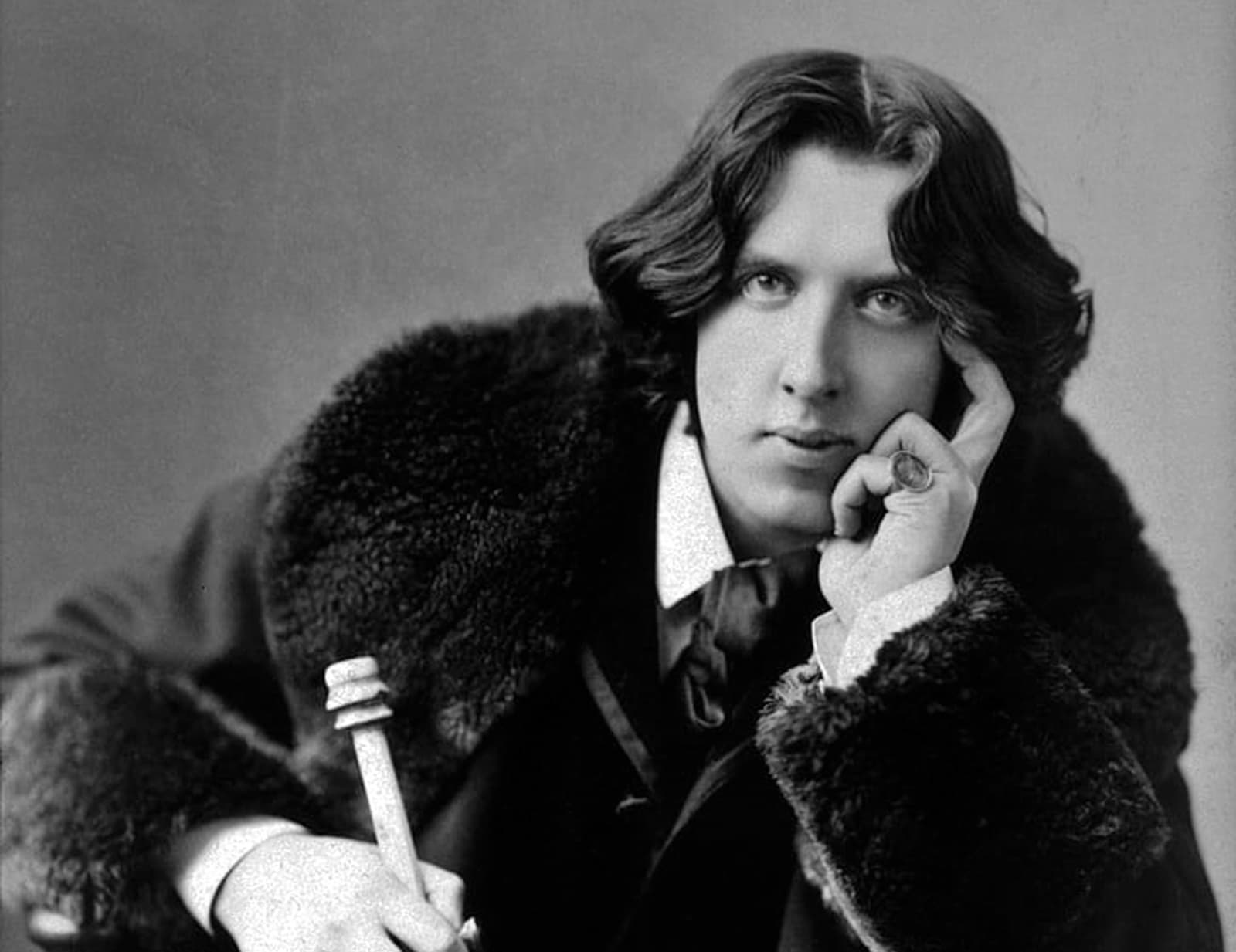
    Oscar Wilde’s Requiescat describes the immense sadness and loss the speaker feels over the death of a young woman. He warns the readers to be careful around her grave because he does not her to be disturbed. In fact, the poem was written as an elegy for his sister, Isola, who died from a fever when she was just nine years old.

    The title is appropriate because requiescat is a shorted form of Latin phrase requiescat in pace, which means rest in peace. In English, the word refers to those prayers wishing for the souls of the dead to have peace in the afterlife.

    Requiescat

    Tread lightly, she is near
    Under the snow,
    Speak gently, she can hear
    The daisies grow.

    All her bright golden hair
    Tarnished with rust,
    She that was young and fair
    Fallen to dust.

    Lily-like, white as snow,
    She hardly knew
    She was a woman, so
    Sweetly she grew.

    Coffin-board, heavy stone,
    Lie on her breast,
    I vex my heart alone
    She is at rest.

    Peace, Peace, she cannot hear
    Lyre or sonnet,
    All my life’s buried here,
    Heap earth upon it.

    Cloze Test

    When studying literature, you need to be able to show your understanding of the poem by summarising the story. Complete the following cloze test by selecting the correct word or phrase for each blank space. You should also use quotation marks to identify that you have integrated words from the poem in your response.

    The speaker wants the audience to __________ around his sister’s grave because he does not want her to be disturbed. He also wants us to __________ because she can even hear the __________.

    The speaker imagines his sister’s __________ turning to __________. Sadly, she was __________. and but is now buried beneath the __________.  and __________.

    The speaker feels because his __________ with his sister and she can no longer hear the beautiful sounds coming from a __________.

    Answers

    1. golden hair
    2. coffin-board
    3. fair
    4. speak gently
    5. lyre or sonnet
    6. alone
    7. life’s buried
    8. tread lightly
    9. daisies grow
    10. rust
    11. heavy stone
    12. young

    Short Essay Question

    In detail, explain how the writer creates sympathy in the reader towards his sister. In your response, you should consider the following images which are used to describe the character:

    • the adjectives “bright and golden” used to describe her hair;
    • the metaphor describing her hair turning to “rust”;
    • the adjectives “young” and “fair”;
    • the simile “lily-white” describing her skin;
    • the simile comparing her skin to “snow” and the symbolism of the colour;
    • his sister’s innocence – “she hardly knew”; and
    • the adverb “sweetly” describing her growth.

    For each quotation, you should explain the meaning of the image by defining the words and then what they suggest about the sister. You should also offer your opinion of the sister in your conclusion.

    Suggested Answers

    The speaker wants the audience to “tread lightly” around his sister’s grave because he does not want her to be disturbed. He also wants us to “speak gently” because she can even hear the “daisies grow”.

    The speaker imagines his sister’s “golden hair” turning to “rust”. Sadly, she was “young” and “fair” but is now buried beneath the “coffin-board” and “heavy stone”.

    The speaker feels “alone” because his life’s buried with his sister and she can no longer hear the beautiful sounds coming from a “lyre or sonnet”.

    Learn More

    • Pied Beauty

      Pied Beauty

    • I Wandered Lonely As A Cloud

      I Wandered Lonely As A Cloud

    • A Bird Came Down The Walk

      A Bird Came Down The Walk

    • Remember

      Remember