Great stories are full of complex emotions and convincing characters, but examination questions will require you to demonstrate your understanding of “The Scarlet Letter” by focusing on how Hawthorne presents one key aspect or theme throughout the text. All of your thoughts and ideas should only refer to the key term of the essay title.
Hester
The experience of Hester Prynne, as presented in “The Scarlet Letter”, has no relevance to the twenty-first century reader.
The twenty-first century reader is always on the side of Hester Prynne.
In “The Scarlet Letter”, Hester Prynne’s actions do not shock us to the same extent that they shocked their first readers.
Modern readers may consider Hester Prynne’s role in “The Scarlet Letter” as a statement about the status of women in society.
In “The Scarlet Letter”, Hawthorne is clearly on the side of Hester Prynne.
“The Scarlet Letter” is little more than a criticism of attitudes towards women.
“The Scarlet Letter” can be viewed as a Feminist novel.
Hester Prynne fails to live up to the responsibilities of seventeenth-century woman in New England.
Hester Prynne can be seen as the first great modern heroine of American Literature.
Hester Prynne’s silent suffering in “The Scarlet Letter” is not heroic.
In many ways, Hawthorne condones the adultery of Hester Prynne.
Dimmesdale
Arthur Dimmesdale is the only character in the novel who can be considered a hero.
Arthur Dimmesdale is the central character of “The Scarlet Letter”.
In many ways, Hawthorne condones the adultery of Arthur Dimmesdale.
Hawthorne positions the reader to sympathise with Dimmesdale’s plight.
Chillingworth
Roger Chillingworth is the character who undergoes the most change in “The Scarlet Letter”.
In many ways, Hawthorne presents Roger Chillingworth as the moral degenerate in “The Scarlet Letter”.
Roger Chillingworth is the true villain of “The Scarlet Letter”.
In “The Scarlet Letter”, Chillingworth represents true evil.
Pearl
Pearl functions as a symbol in the novel and nothing else.
Religion
“The Scarlet Letter” presents an entirely negative view of Puritan religion in New England.
“The Scarlet Letter” is really a novel of religious criticism and protest.
“The Scarlet Letter” is Hawthorne’s attempt to distance himself from his Puritan ancestors.
“The Scarlet Letter” is a criticism of religion.
In “The Scarlet Letter”, Hawthorne presents a clash between the Puritan faith and human nature.
Genre and Style
Hawthorne’s “The Scarlet Letter” is little more than an allegory.
“The Scarlet Letter” is a symbolist novel.
Hawthorne’s “The Scarlet Letter” is nothing more than a Romance.
“The Scarlet Letter” can be read as a psychological novel.
Hawthorne uses a participating narrator to shape the reader’s response.
In many ways, the scarlet letter is one of the most distinctive characters in the novel.
Themes
Revenge is a central theme of “The Scarlet Letter”.
Secrets are a central theme of “The Scarlet Letter”.
Guilt is a central theme of “The Scarlet Letter”.
Class plays an important role in “The Scarlet Letter”.
The American Dream is an important theme to understanding “The Scarlet Letter”.
“The Scarlet Letter” presents the failure of the American Dream.
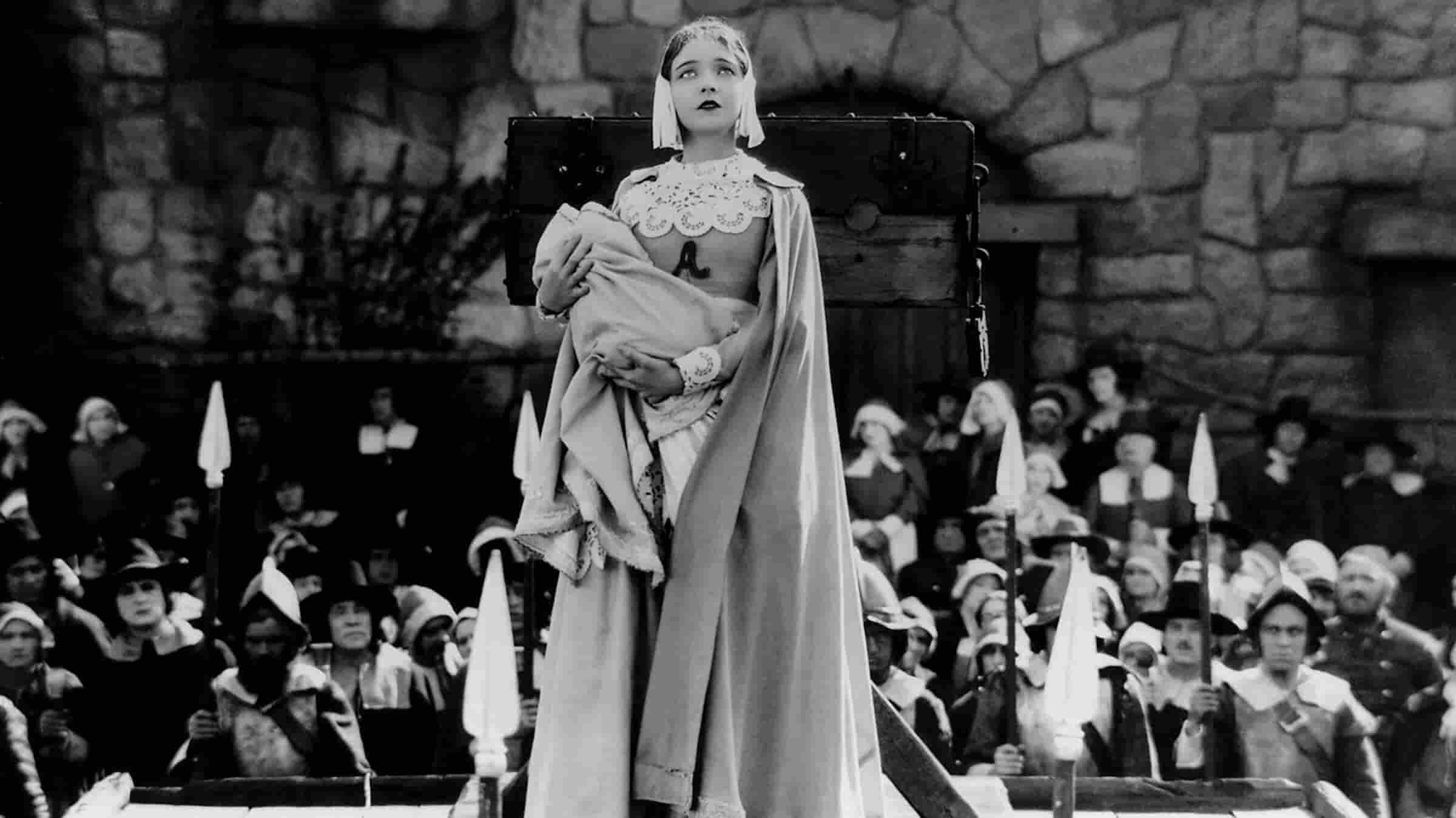
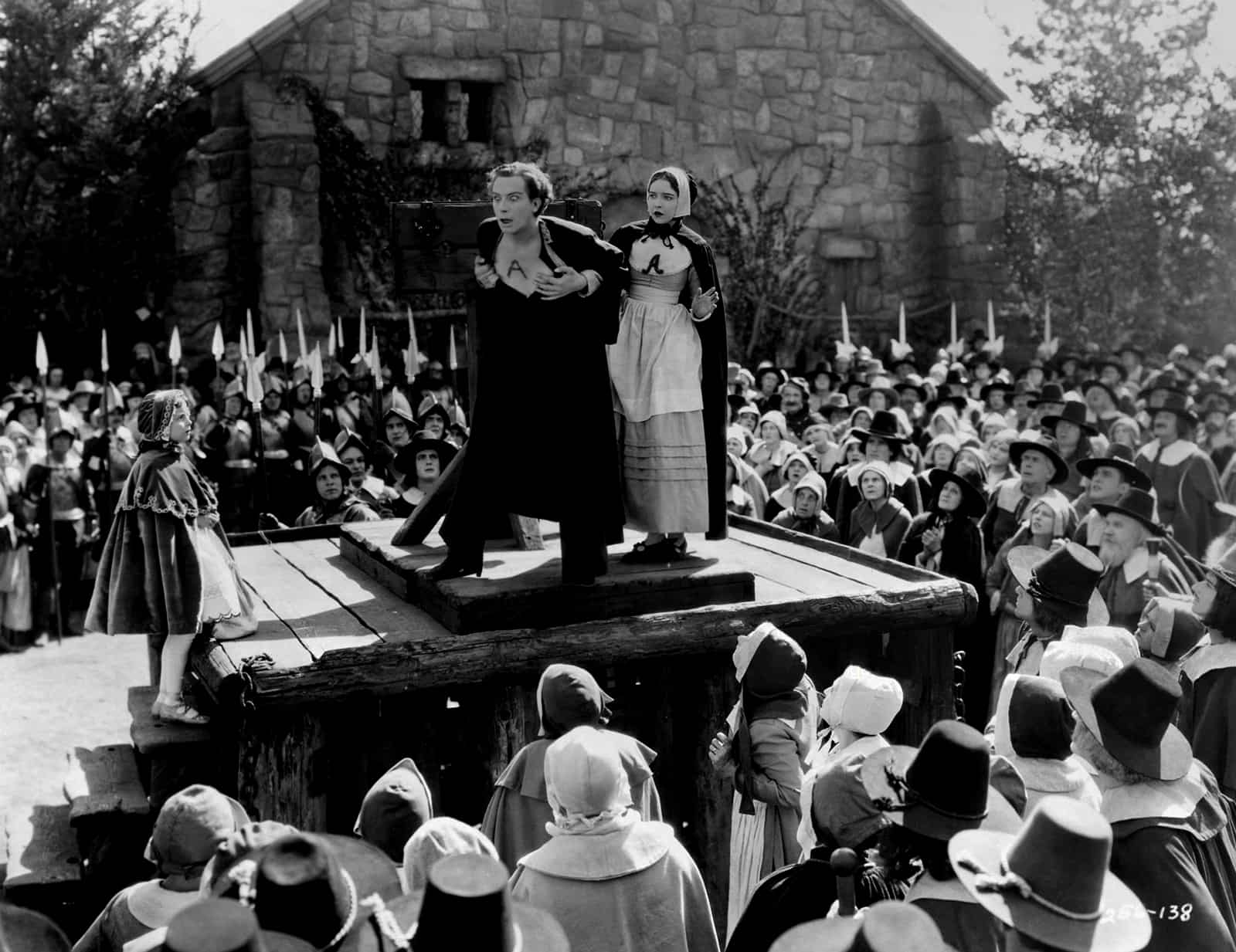
Writers use details and descriptions of clothing to help define their characters. Even the smallest of signifiers can become important manifestations of their personalities and perspectives. This is incredibly obvious in the way the Puritans force Hester to wear the scarlet letter as a symbol of her adultery.
Of course, Hawthorne purposely delivers a rich and varied collection of clothes to elucidate the different characters. However, the imagery also reinforces the idea that we should not be so rigid and narrow in our beliefs that we become intolerant towards others who do not share our views. Fashion can change.
The Puritans
Hawthorne opens the novel with a description of the “throng” of Puritans wearing “sad-colored garments” and “gray, steeple-crowned hats” outside the prison while they wait for the spectacle of Hester’s punishment. The pathetic fallacy of “sad” suggests the cheerless temperament of the society and the metaphor comparing the shape of the “hats” to a church “steeple” conveys their determined focus on religious.
Governor Bellingham, in Chapter Three, wears a “dark feather in his hat” and a “black velvet tunic”. As the political leader of the colony, his clothing epitomises its dark hues.
Sumptuary Laws
Sumptuary Laws are an attempt to regulate, for example, the clothes a person can wear according to their rank in society. Historically, they were used for economic reasons, such as manipulating the price of commodities, or to differentiate between the ranks in society. The Puritan’s legislation was more concerned with morality when it passed its own sumptuary laws.
For example, in a session held at Newe Towne in 1634, the General Court threatened the forfeiture of any apparel with “lace on it, siluer, golde, silke, or threed”, decreed that men and women were only permitted to have on “slashe on each sleeue”, and that men were no longer allowed to wear “newe fashions” or have “longe haire”.
These proclamations were an attempt to control the modesty and of its citizens.
According to Hawthorne in chapter five, ostentatious displays of clothing, such as “deep ruffs, painfully wrought bands, and gorgeously embroidered gloves”, were “readily allowed to individuals dignified by rank or wealth, even while sumptuary laws forbade these and similar extravagances to the plebeian order”.
However, in the second chapter, the writer describes Hester’s scarlet letter as “so artistically done” it was “greatly beyond what was allowed by the sumptuary regulations of the colony”. Interestingly, the symbol of her crime and punishment breaks the law.
Hester
In Chapter Five, Hawthorne presents Hester’s “dress” as the “coarsest materials” of the “most sombre hue” which was “her doom to wear”. These superlatives describing her clothing demonstrate her strong commitment to the sumptuary laws of the colony and her willingness to repent for her adultery.
Her “sombre” and serious clothing also reassures the reader that her affair with Dimmesdale was not the action of an impetuous and unruly young girl.
However, the “fantastically embroidered” scarlet letter is artistic and brilliant. As one of the female spectators notes in “The Market-Place”, “she hath good skill at her needle, that’s certain”.
At the end of the fifth chapter, Hawthorne describes the “terrific legend” that promoted the idea the scarlet letter was “red-hot with infernal fire”.
The contradictions of Hester’s clothes signify her complicated personality. She is a holy sinner.
Pearl
Hester dresses Pearl with “fantastic ingenuity”. In “The Governor’s Hall”, she wears a “crimson velvet tunic, of a peculiar cut” which was “abundantly embroidered with fantasies and flourishes of gold thread”. In the next chapter, Reverend Wilson calls her a “little bird of scarlet plumage”.
Dressed in red with artistic flourishes of thread, “she is the scarlet letter”!
Pearl, like her clothes, is “beautiful and brilliant” but not “amenable to rules”.
Chillingworth
The villain of the novel is first introduced at the start of the third chapter. He is “clad in a strange disarray of civilised and savage costume”. His clothing represents the “civilised” educated scientist who becomes “savage” in his desire for revenge.
The use of the noun “costume” also hints at the Chillingworth’s decision to hide his true identity because his clothes become a disguise. Chapter nine begins with the statement “under the appellation of Roger Chillingworth, the reader will remember, was hidden another name”. In this way, Hawthorne shows the reader how our identities can change as easily as the clothes we wear.
The New England Holiday
Chapter twenty-one exemplifies Hawthorne’s depiction of clothing because it contains the most variation. Having consistently pesented the Puritans wearing “sad-colored garments”, the writer speculates if historians “exaggerate” their “gray or sable tinge”.
Hester, of course, wears a “garment of coarse gray cloth” while Pearl was “decked out with airy gayety”. Hawthorne admits it is an “outward manifestation of her character”.
He then introduces the “rough figures” from the “forest settlements” who were dressed in “deer-skins”. A “party of Indians” are also wearing “deer-skin robes” but their “savage finery” includes “red and yellow ochre” and “feathers”.
There was an abundance of wildlife in the mighty New England forests, including deer, but no plantations or farms. Therefore, it is important to note that these migrants had to fashion clothes from what resources were available and suited the region’s conditions. The Puritan’s “sad-colored garments” would have been inappropriate in the vast forests, especially in the wetlands and hills of New England.
Similarly, Native Americans wore the animal hides, such as deer and buffalo, from their hunts because it was necessary and efficient. Leather is certainly more durable.
Joining this “throng” to watch the procession are the “rough-looking desperadoes” from the Spanish ship who are wearing “wide, short trousers” with “belts” and knives. Again, it is important to recognise the benefits of “short trousers” on a ship. They ensured the sailors remained dry when they washed the decks or not get caught in the ship rigging. They were “wide” because it helped with their buoyancy if they landed in the water.
The “showy and gallant” shipmaster risked transgressing the colony’s sumptuary laws and “incurring fine or imprisonment, or perhaps an exhibition in the stocks” because of the “ribbons of his garment, and gold lace on his hat” which also had a “gold chain” and a “feather”. He is dressed more ostentatiously because he wants to exude power and authority in the same way the Puritan dignitaries wore “deep ruffs, painfully wrought bands, and gorgeously embroidered gloves” for official state functions and the native Americans distinguished themselves by their colours.
Conclusion
When Hester is released from prison, she must decide where to live. One of her choices, to move back to England, is presented through the simile “like garments put off long ago”. The comparison suggests her old life no longer fits or suits, so she cannot hope to wear it again.
After their encounter in the forest, Dimmesdale returns to the settlement and believes he has changed so much that he the settlers would find their minister “flung down there like a cast-off garment”.
As Pearl notes in “The New England Holiday”, the blacksmith has “washed his sooty face” and is wearing his “Sabbath-day clothes”.
Our identity, like the clothes wear, is not permanent or absolute.
The historian, James Truslow Adams, was the first person to define the concept of an American Dream in 1931. In his book, “The Epic of America”, he argued the American Dreams is:
“…that dream of a land in which life should be better and richer and fuller for everyone, with opportunity for each according to ability or achievement. It is not a dream of motor cars and high wages, but a dream of social order in which each man and each woman shall be able to achieve the fullest stature of which they are capable of, and be recognized by others for what they are, regardless of the circumstances of birth or position.”
This optimistic sense of freedom and equality has its origins in the colonial setting of “The Scarlet Letter”, but the concept continued to evolve significantly when Hawthorne wrote the novel in the middle of the 19th century.
Hawthorne’s “sweet moral blossom” exposes some of the failures of the American Dream but offers hope it can succeed.
Bond Slaves
The new colonies in America needed to attract lots of workers to secure the future of the settlements. Many impoverished Europeans were eager to cross the Atlantic in hope of a “richer” life, but they were unable to afford the expensive passage.
To solve the problem, a system of indentured servitude was developed. Wealthier settlers paid for their servants’ transportation and lodging if they agreed to work for a number of years specified in the contract.
Almost half the early European immigrants to the Thirteen Colonies were indentured servants so it is no surprise that Hawthorne includes three references to “bond-slaves”. In “The Marketplace”, the writer mentions how a “sluggish bond-girl” might be publicly punished on the scaffold and a “seven-years’ slave” answers the door to “The Governor’s Mansion”.
Interestingly, it takes Dimmesdale seven years to publicly admit to his affair – the typical length of a bond-slave covenant. Perhaps Hawthorne is suggesting the American Dream of independence and self-determination can be achieved. However, this moment comes just before Dimmesdale dies so that optimism is severely deflated.
The third reference is to Hester when, in “The New-England Holiday”, Hawthorne describes the protagonist as a “lifelong bond-slave”. If immigration to America was a quest for freedom, it seems she represents a failure of that dream because she is always indentured to the Puritan colony and their “stern” and “strict” rules.
Religious Freedom
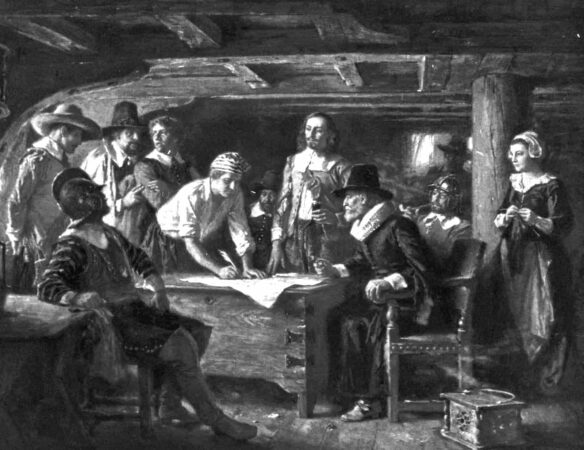
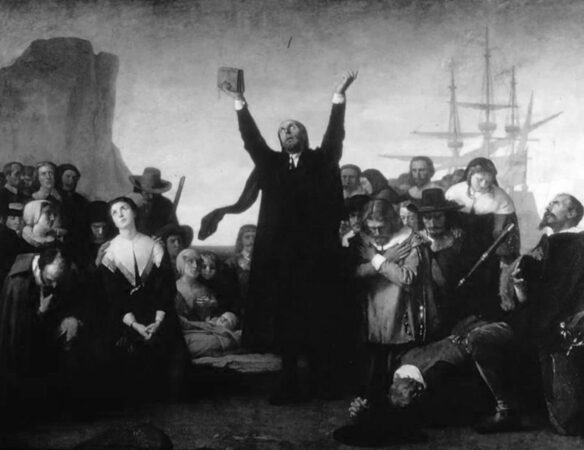
The Puritans were a group of Christians who wanted to take a simpler and stricter approach to their faith. They rejected the ostentations of the Catholic church and the authority of the papacy, but they were also unwilling to recognise the divine authority of the King of England.
The first governor of Massachusetts Bay Colony, John Winthrop, was determined to establish “a city upon a hill” in this New World where the Puritan settlers could express their religious beliefs closer to God.
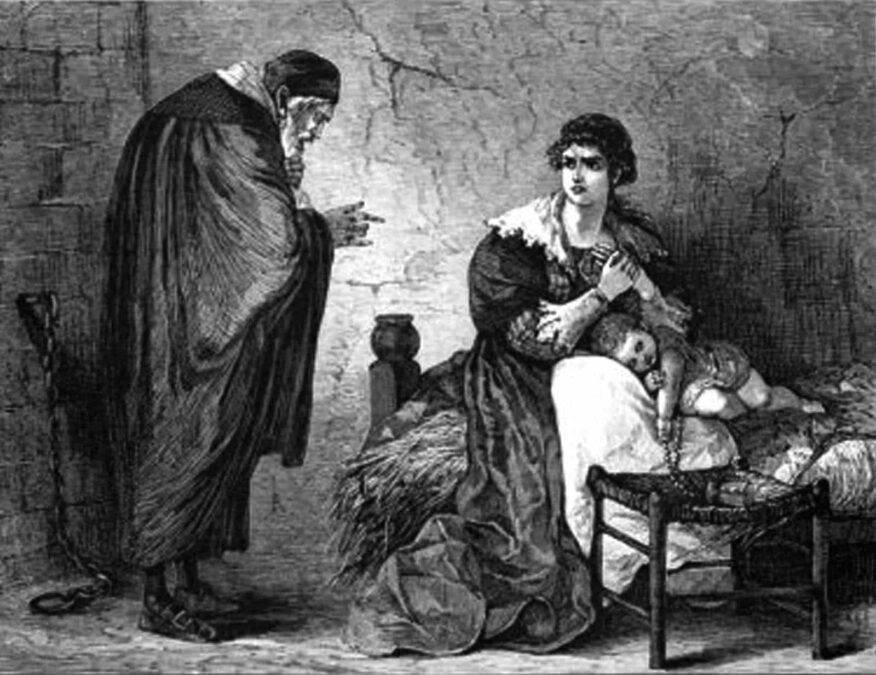
Roger Chillingworth is the fiercely intelligent scholar who arrives at the Puritan settlement after two years of captivity to discover his wife standing on the “pedestal of shame” in the marketplace because of her illicit affair.
When he recognises Hester, Hawthorne describes how a “writhing horror twisted itself across his features”. He is so appalled by the sight of his wife’s ignominious punishment that the anguish contorts his face which “darkened with some powerful emotion”. The reader is left to guess which emotions.
Roger Chillingworth
Hester had “embodied the warmth and cheerfulness of home” so her infidelity and “ignominious exposure” makes him feel incredibly aggrieved.
He also wants to avoid the “contagion of her dishonour” and warns Hester that he “will not encounter the dishonour that besmirches the husband of a faithless woman”. Notice the use of “dishonour” and the metaphor comparing it to a disease. Chillingworth is more concerned about his integrity and worth in the settlement rather than any feelings of despondency or rejection.
Therefore, he “chose to withdraw his name from the roll of mankind” and decided to go “under the appellation of Roger Chillingworth”.
Hester Prynne
Hester is suspicious of her husband’s intentions when he wants to administer a draught to Pearl, asking if he would “avenge thyself on the innocent babe”. He calls her a “foolish woman”. When he “presented the cup to Hester”, she was “full of doubt”. He assures her that his “purposes” are not so “shallow”.
Chillingworth believes the best “scheme of vengeance” is to protect Hester from “all harm and peril of life” so that the “burning shame” of the scarlet letter will continue to “blaze” and he will be able to watch her “doom”.
This vengeance will be her physiological torture.
Arthur Dimmesdale
At the end of a conversation with a townsman in the third chapter, Chillingworth is angry that the identity of the father “remaineth a riddle” and resolves to discover the truth.
He warns Hester in the prison that he “shall seek this man” and he “shall see him tremble”. The quick repetition of modal verb “shall” emphasises his uncompromising determination to give Hester a “partner on thy pedestal”.
However, he does not want to “interfere with Heaven’s own method of retribution”. In other words, he will not attempt to seek his own divine punishment. Chillingworth will also not “betray him to the gripe of human law”. The use of word “gripe” personifies the courts firmly grabbing criminals and dragging them to justice. Since the word also connotes a whining complaint, Chillingworth is deflating the importance of earthly law.
The antagonist declares “he will be mine”. He is searching for a more malevolent vengeance.
The Intimate Revenge
Chillingworth began his “investigation” with the “severe and equal integrity of a judge”, comparing it to a neutral inquiry without any emotional prejudice. It is simply a curious and intellectual “geometrical problem” that needs to be solved.
He tells Hester that he has “sought truth in books” with the same scientific rigor as he has “sought gold in alchemy”. Chillingworth intends to approach the “riddle” logically with research and experiments.
However, his search for the truth became a “terrible fascination”.
Hawthorne compares the antagonist’s actions to a “miner searching for gold” in the tenth chapter. This simile suggests his desire for impartial justice is now a greedy thrill. He unearths “many precious materials” in his “long search into the minister’s dim interior”.
The writer offers another simile, comparing Chillingworth to an unscrupulous “sexton delving into a grave” searching for a “jewel”. His selfish motivation is now darker and more sinister.
A third simile compares him to a “thief entering a chamber” wanting to “steal… treasure”. He is no longer an agent of justice, but a stealthy and self-indulgent criminal who is only interested in his own terrible gain.
Chillingworth’s actions are described as his “intimate revenge”. This could refer to his psychological torture of Dimmesdale while pretending to be his companion. However, it could also describe the wild excitement he feels in his malicious “quest” for the truth.
Modern villains developed from the devils portrayed in medieval morality tales into the despicable villains of 16th century dramas. It is no surprise, therefore, that Hawthorne associates Chillingworth with devil several times in the novel.
The Devil Motif
The first reference occurs at the end of “The Interview” when Hester questions if he was the “Black Man that haunts the forest round us”. The Black Man was a name used for Satan and the “forest” signifies his physical and psychological evil.
Some of the settlers become suspicious of his intentions towards Dimmesdale’s health and recognise that “there was something ugly and evil in his face”. This “portion of the community” believed the “fire in his laboratory” was “fed with infernal fuel” and Chillingworth was “Satan himself, or Satan’s emissary”.
When Hester looks at the old man in chapter fourteen, she sees a “glare of red light out of his eyes” as if his “soul were on fire”. Hawthorne then compares Chillingworth to a man who is “transforming himself into a devil” when he is “adding fuel” to Dimmesdale’s torture.
Chillingworth even admits to Hester he is a “fiend” at the Reverend’s “elbow” when he imagines his “direst revenge”. His self-conscious decision to relentlessly torture Dimmesdale and enact an “intimate revenge” is diabolical.
Chapter fifteen ends with Chillingworth ripping open Dimmesdale’s vestment and reacting with “ecstasy” to what he found underneath. Hawthorne suggests to the reader his mad delight is “how Satan comports himself, when a precious human soul is lost to heaven, and won into his kingdom”.
There are lots of sinners in the novel, Chillingworth is the “arch-fiend” and a fantastic villain.
Appearance
Chillingworth argues that a “bodily disease” is a “symptom of some ailment in the spiritual part”. Of course, writers often link the personality of character to their physical features.
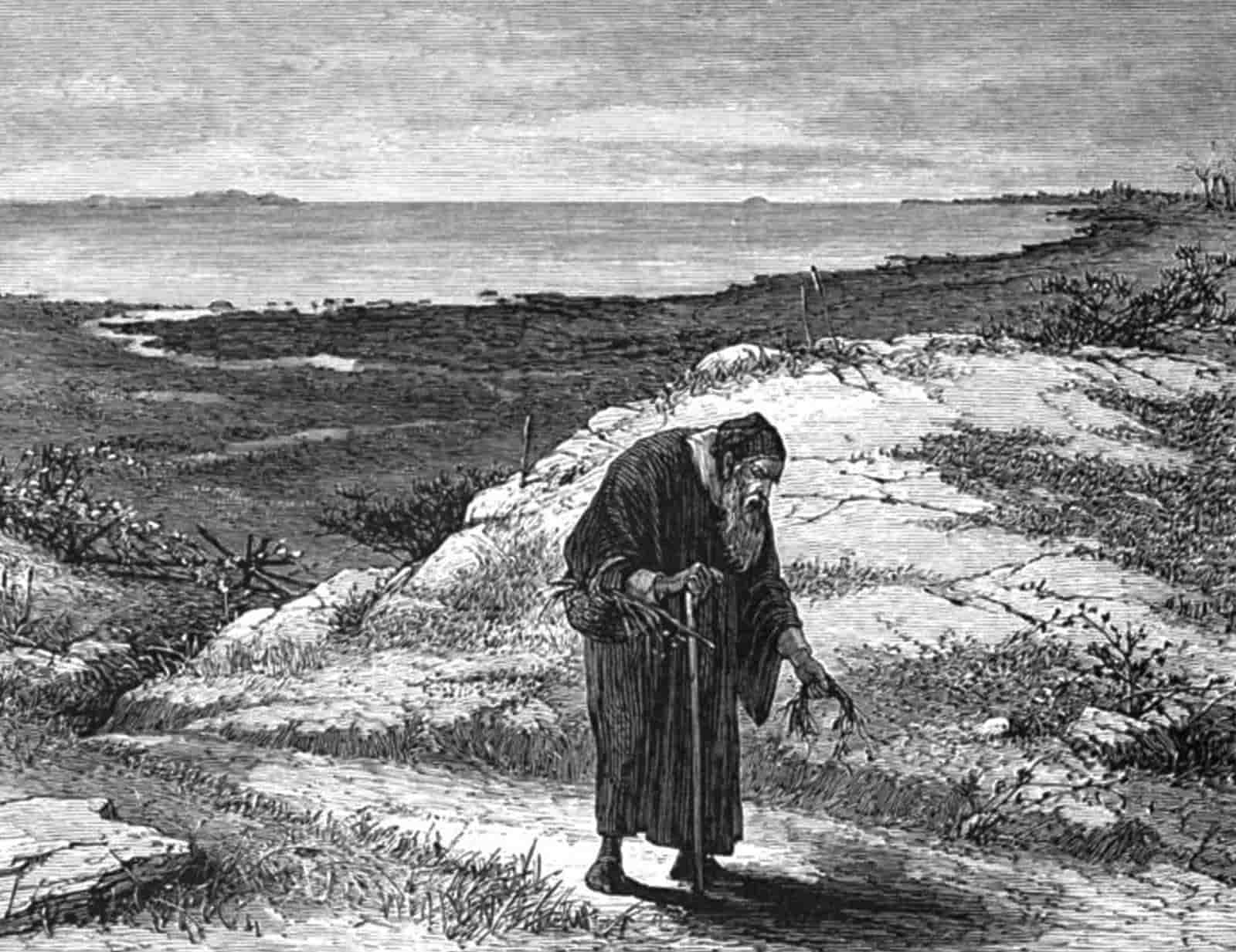
For Chillingworth, his malevolence is epitomised by his “slightly deformed” body with the “left shoulder a trifle higher than the right” because the left or “sinister” side is traditionally used to represent evil. Hawthorne immediately repeats the detail in the third chapter: “one of this man’s shoulders rose higher than the other”. The “slight deformity of the figure” could signify his wicked search for revenge.
However, in “The Interview”, Chillingworth reminds Hester he was “misshapen from my birth hour”. This suggests there was a “quiet depth of malice, hitherto latent” and the character was always capable of evil.
When he recognised Hester on the scaffold, “a writhing horror twisted itself across his features, like a snake gliding swiftly over them”. The adjective “writhing” describes how the immense pain and shock contorts his face. In a Christian context, the comparison to a venomous “snake” adds connotations of sin to his reaction.
Hawthorne then describes how “his face darkened with some powerful emotion”. Although the strong emotion is left vague, the verb “darkened” implies there was wickedness because the absence of light also symbolises evil.
Deadliest Enemy
Chillingworth’s intense and relentless psychological examination of Dimmesdale is a “more intimate revenge than any mortal had ever wreaked upon an enemy”.
Dimmesdale fails to realise the “machinations of his deadliest enemy” and continues to be “tortured” by Chillingworth when he “dug into the poor clergyman’s heart”.
This villainy is even more despicable because Chillingworth was his “trusted friend” and he has “violated, in cold blood, the sanctity of a human heart”. As Dimmesdale notes, “that old man’s revenge has been blacker than my sin”.
Conclusion
When Dimmesdale beckons Hester and Pearl to join him on the scaffold in “The Revelation of the Scarlet Letter”, Chillingworth tries to stop them, but the minister manages to reveal the truth about the scandalous affair. Hawthorne describes it as a “victory”.
Chillingworth has a “blank, dull countenance, out of which the life seemed to have departed”. Unable to continue his revenge, the old man is defeated and cries “thou hast escaped me”.
In the “Conclusion”, Hawthorne tells the reader there was “no more devil’s work on earth” for Chillingworth.