Introduction
After witnessing the awful death of her grandmother, Mary is rescued by a mysterious lady and taken to an inn. The following comprehension exercises will help you engage with what happens next this section of the novel.
Remember to use the words of question and use evidence from the text to support your response. There are suggested answers at the bottom of the page.
Entry 4 – Comprehension Questions
- What two reasons does the narrator give for falling asleep?
- How does her “companion” in the carriage hide her face?
- What does the narrator have to eat?
- What figure of speech is used in the following image: “she rolled her sleeves to show forearms as thick as ham hocks”? Do you think this is an effective comparison?
- Why did Annie have to change the water as she cleaned the narrator?
- Find an example of onomatopoeia from the entry?
- Why does the narrator feel like someone else looks back at her from the mirror?
- Compare and contrast the narrator’s “little sleeping platform” of her cottage and the inn’s bedroom.
Entry 5 – Comprehension Questions
- How does Mary’s new outfit compare to her previous clothes?
- Following on from question one, how does Mary realise that she will not be going with the young woman?
- Why are the Puritans “leaving for a new life” across the Atlantic “in America”?
- From this entry, what do you learn about the background to the story? Try to summarise the information in bullet points or in a diagram.
Entry 5 – Narrative Voice
Entry Five begins with the phrase “I did not see the woman who had brought me here” and ends with “I was looking into the eyes of my mother”. In terms of the story and creating an intriguing narrative, how important is it when a writer reveals information to the reader? Explain your answer with references to the plot and our reactions to the story.
You can begin your response by using the following sentences: “Witch Child” is a first-person narrative written from the perspective of a young girl named Mary. Taking the form of diary entries, it reveals her inner thoughts and feelings about her terrible situation after the death of her grandmother.
Entry 6 – Creative Writing
Celia Rees wants the reader to feel sympathy for Mary. The character is alone in a cold, dark place. She tired and cannot see an end to her journey. Write the story from the carter’s point of view. Your aim is also to create sympathy for Mary by describing his view of the girl and what he thinks about her situation.
Entry 7 – Comprehension Questions
- What figure of speech is used in the sentence “the masts and rigging of tall ships showed through it like bare branches in winter”? Explain why the comparison is effective.
- What figure of speech is “the cry of gulls like mocking laughter”? Explain why the comparison is effective.
- Why is the alliteration of “suck and slap” effective in describing the movement of the “water”?
- Find an example of onomatopoeia in the first paragraph and explain why it is an effective word choice.
Entry 7 – Setting
Look at the following extract:
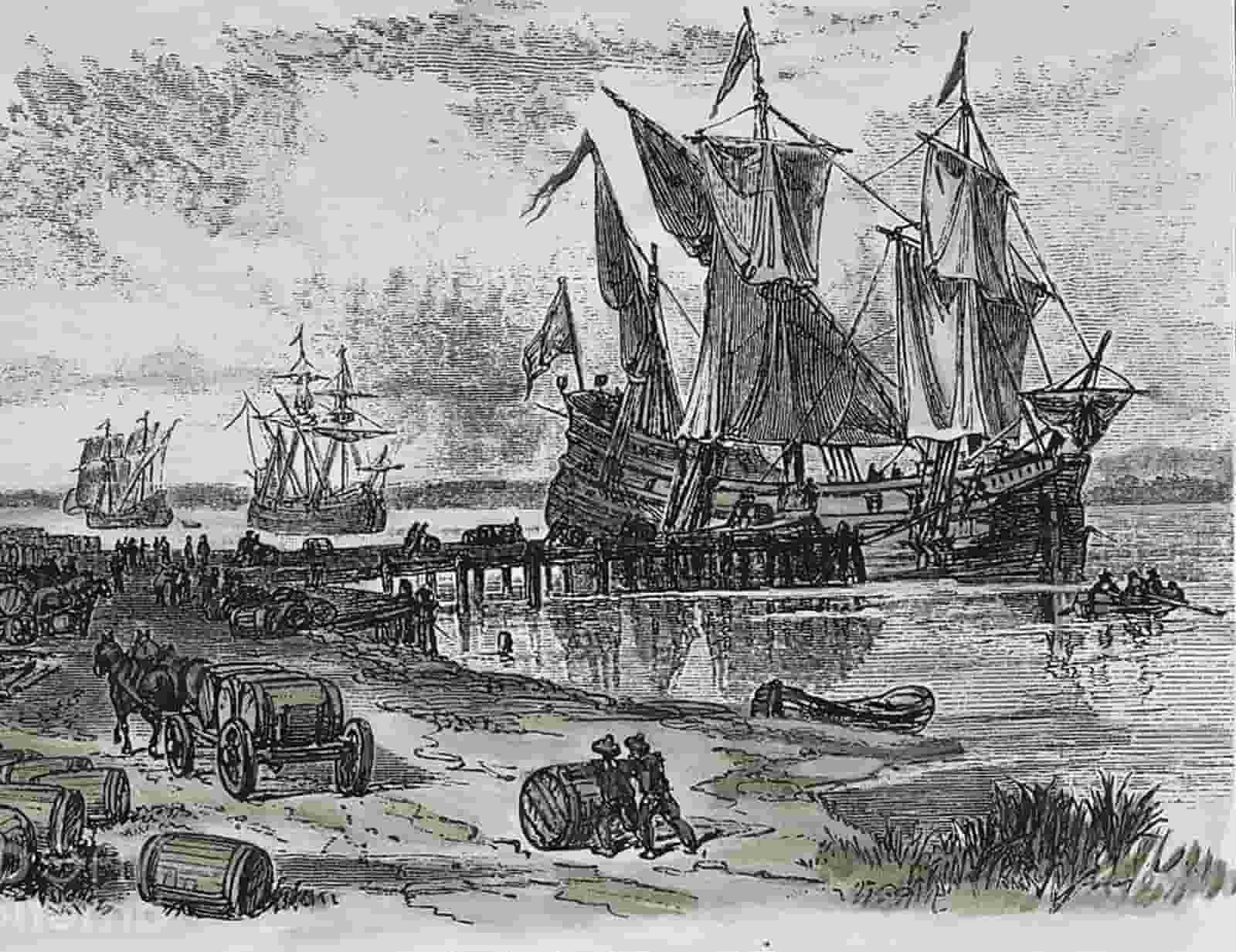
I had never seen the sea, but even before the carter’s brawny arm could shake me, I felt a difference in the air, damp against my cheek and smelling of salt and fishy decay, and heard the cry of the gulls like mocking laughter. I opened my eyes to white curling mist. The masts and rigging of tall ships showed through it like bare branches in winter. The cart rumbled along the quayside on iron-rimmed wheels, and all around was the suck and slap of water, the creaking of timber, the grinding of ships rubbing together.
Essay Question: Consider how the Rees appeals to our five senses.
Entry 7 – Word Search
Widening your vocabulary is an important way to improve your reading skills. Listed below are ten definitions of words you can find in Entry 7. Scan through the chapter and try to match these definitions to the words from the text.
- Large cave (9) –
- A low sound; whisper (6) –
- Something that divert attention (11) –
- Large spoon (6) –
- Bad luck (10) –
- Disappointed; deceived (13) –
- Thick flesh (6) –
- Planned (9) –
- Starting (12) –
- Decide (7) –
Entries 8-10 – Similes
A simile is a figure of speech which directly compares two different things, usually by employing the words “like” or “as”. When you analyse a simile, you should begin by identifying the two “things” that are being compared. Then you should think about how these two things are similar. At this point, you can decide if the simile is effective.
You are going to examine five similes from Entries 8 to 10. Your task is to identify the two ideas being compared and then explain why the comparison is appropriate.
- The “mist” smothered “everything like a great fleece”.
- His “fleshy face” was “as long as a fiddle”.
- His “long pale hands fluttered over the pages of the Bible like a spider”.
- “Hatred muttered after us like pattering footsteps”.
- The travellers are “packed as tight as the cattle” on the ship.
- “His back bent like an old man”.
Model Answer
The “mist” smothered “everything like a great fleece” is an appropriate simile because it conveys the thick softness and cover of the “mist” effectively to the reader. The comparison, fleece, is soft, thick wool and suggests the main image, mist, has those characteristics. Wool is usually an off-white colour so it describes the colour of the mist vividly. Finally, both images are similar because they are both covers.
Entries 8-10 – Adjectives
An adjective is a describing word giving the reader a little more information about the noun. Read Entry 8 and find adjectives which describe the following nouns:
- _____ calm
- ________ winds
- _______ people
- _____ fog
- ______ face
- _______ consultation
- ______ humiliation
Entry 9 – Adjectives
It is also important to find patterns in the adjectives used to describe people and places. Read Entry 9 and find adjectives that describe Elias Cornwell. You are looking for around fifteen examples.
Write them down in a list.
The next step is to see if you can organise these quotations into categories or their similarities.
Short Essay Question: How does Rees present Elias Cornwell?
Entries 10 – Verbs
A verb is often called a doing word because it describes the action of the noun. Read Entry 10 and make a substantial list of the variety of verbs used by Celia Rees.
Again, see if you can find connections and similarities between the words and what they describe.
Think about why a writer chooses one verb over another? For example, why does Rees use “chanted” instead of “sang” or “heaving” instead of “pulled”?
Suggest why Celia Rees selected these energetic verbs.
Suggested Answers
Entry 4
What two reasons does the narrator give for falling asleep?
The narrator’s feelings of “exhaustion” and the “constant swaying motion” of the carriage are the two reasons she gives for falling asleep.
How does her “companion” in the carriage hide her face?
The narrator’s companion hides her face behind a “veil”.
What does the narrator have to eat?
The narrator has lots to eat. She has “stewed meat”, “mutton”, “wheaten bread and cheese” and a “mug of beer”.
What figure of speech is used in the following image: “she rolled her sleeves to show forearms as thick as ham hocks”? Do you think this is an effective comparison?
The figure of speech is a simile. The comparison is effective because a “ham hock” is a large, thick piece of meat just like her muscular arms.
Why did Annie have to change the water as she cleaned the narrator?
When Annie cleaned the narrator, she had to change the water because Mary was so “dirty”.
Find an example of onomatopoeia from the entry?
The word “sloosh” is an example of onomatopoeia from this entry.
Why does the narrator feel like someone else looks back at her from the mirror?
The narrator feels like someone else looks back at her from the mirror because she looks so much cleaner and older.
Compare and contrast the narrator’s “little sleeping platform” of her cottage and the inn’s bedroom.”
The narrator’s “little sleeping platform” was in the “smoky loft” of her cottage and she only had “rough homespun blankets” and a “straw-stuffed palliasse”. By contrast, she had “never been in a bed” like the one in the inn. It was “heated by a brass pan full of coals” to keep her warm.
Entry 5 – Comprehension Task
How does Mary’s new outfit compare to her previous clothes?
Mary’s new clothes are “not the finest but better” than her old ones. However, she is now wearing “sad colours”.
Following on from question one, how does Mary realise that she will not be going with the young woman?
Mary is wearing “plain clothes” and the woman is in her “rich attire” which suggests they will not be travelling together because they are dressed differently.
Why are the Puritans “leaving for a new life” across the Atlantic “in America”?
The Puritans are “leaving for a new life” because they “fear that their faith will no longer be tolerated”.
From this entry, what do you learn about the background to the story? Try to summarise the information in bullet points or in a diagram.
Entry 5 – Narrative Voice Model Answer
In terms of the story and creating an intriguing narrative, how important is it when a writer reveals information to the reader?
“Witch Child” is a first-person narrative written from the perspective of a young girl named Mary. Taking the form of diary entries, it reveals her inner thoughts and feelings about her terrible situation after the death of her grandmother. However, it is important for the author to decide when and how they should reveal information to the reader.
By withholding details, the writer can create intrigue and suspense. For example, Rees does not reveal the identity of the lady until the end of Entry 5, leaving the reader with questions until the surprising revelation she is Mary’s mother!
Entry 7 – Suggested Answers
What figure of speech is used in the sentence “the masts and rigging of tall ships showed through it like bare branches in winter”? Explain why the comparison is effective.”
The figure of speech is a simile. The image vividly compares the long, thin and bare “masts” of the tall ships to the empty and leafless trees in “winter”.
What figure of speech is “the cry of gulls like mocking laughter”? Explain why the comparison is effective.
The image of “the cry of gulls like mocking laughter” is a simile. It is an effective comparison because nasty and cruel laughter is often high-pitched like the short “cry” of seagulls.
Why is the alliteration of “suck and slap” effective in describing the movement of the “water”?
The alliteration of “suck” and “slap” is very effective in describing the movement of the water because they echo the sound of the waves striking forcefully against the ships and then suddenly draining away.
Find an example of onomatopoeia in the first paragraph and explain why it is an effective word choice.
There are a number of onomatopoeic words in the first paragraph. For example, “rumbled” conveys the deep and heavy sound of the cart’s wheels against the quayside. The alliterative “suck” and “slap” mimic the sounds and rhythm of the water against the boats very effectively. Finally, the onomatopoeic “creaking” suggests the sharp, squeaking sounds of the wet timbers moving in the water. All of these sound words help create the noisy world of the quayside.
Entry 7 – Setting Suggested Answer
Explore in detail how the Rees appeals to our five senses.
Rees recreates the sights and sounds of the quayside by appealing to the reader’s senses. For example, she describes the sharp and nasty smell of the “salt and fishy decay” which shocks the narrator.
The writer also appeals to our sense of sound with the vivid description of the “cry of the gulls” compared to “mocking laughter”. This simile suggests that Mary is incredibly nervous. There is also the onomatopoeic “rumbled” describing the “cart” moving on the quayside, and the alliterative “suck and slap” describing backwards and forwards motion of the water.
Rees also suggests how the quayside looked by describing the “white” colour of the mist and the detail about the ships and their “masts and rigging” being compared to “bare branches”. This simile is a very effective way to describe the complex shapes of the ships’ bare wood.
Finally, the “damp” air appeals to our sense of touch, making the reader feel cold and wet.
Entry 7 – Word Search
Answers
1.Large cave (9) – cavernous
2.A low sound; whisper (6) – murmur
3.Something that diverts attention (11) – distraction
4.Large spoon (6) – ladled
5.Bad luck (10) – misfortune
6.Disappointed; deceived (13) – disillusioned
7.Thick flesh (6) – brawny
8.Planned (9) – contrived
9.Starting (12) – commencement
10.Decide (7) – resolve
Entries 8-10 – Adjectives
Answers
- dead calm
- contrary winds
- careful people
- thick fog
- fleshy face
- worried consultation
- solemn humiliation
Entries 9 – Adjectives
Voice
- rich voice
Facial Features
- white face
- pinched features
- pale eyes
- high sloping forehead
- whitish hair
- yellow and straight
- thin pointed nose that is pink and square ended
- hunched
- old man
- long pale hands
- inked fingers
- supposed to be “young”
Clothes
- rounded hat
- black clothes
Entry 9 – Presentation of Elias Cornwell
Suggested Response
Effective descriptions of characters will help the reader to visualise them and we will engage more closely with their stories.
However, writers will also use these details and descriptions to suggest something about the character’s personality. For example, a “high sloping forehead” traditionally suggests intelligence.
Rees presents Elias Cornwell as old and hunched even though he is a younger preacher. For example, the adjective “white” used to describe his “face” and “whitish hair” both suggest that he has been drained of colour because of his age. This is reinforced by the adjectives used to describe his body: “bent” and “old”. Older people are often described with withered bodies. Finally, the simile comparing his “long pale fingers” to a “spider” also suggests he is frail and thin.
Entry 10 – Verbs Answers
Verbs (1-10)
1.Torn
2.Blowing
3.Carrying
4.Carting
5.Picked
6.Stepped
7.Smelt
8.Clung
9.Ceased
10.Sweated
11.Chanted
12.Hauling
13.Heaving
14.Nodded
15.Plucked
16.Reached
17.Fell
18.cracked
Suggest why Celia Rees selected these energetic verbs.
- Precision – to give the exact movement of the noun.
- To evoke a particular emotion.
- To create a particular effect – such as an onomatopoeia.


